A custom-fitted solution for replacing multiple missing teeth that restores the function and appearance of your smile and helps you eat, speak, and live with confidence again.
A denture is a removable dental appliance custom-made to replace multiple missing teeth and the surrounding gum tissue. Dentures are designed to closely resemble your natural teeth and are fitted specifically to the shape of your mouth for a comfortable, secure fit. Whether you are missing all of your teeth or just several, there is a denture option that can restore both the look and function of your smile.
Modern dentures are more natural looking and comfortable than ever before. Advances in dental materials and fitting techniques mean that today's dentures are designed to feel secure and look like a seamless part of your smile.
Your provider will evaluate your oral health, discuss your goals, and recommend the type of denture that best fits your specific needs and lifestyle.
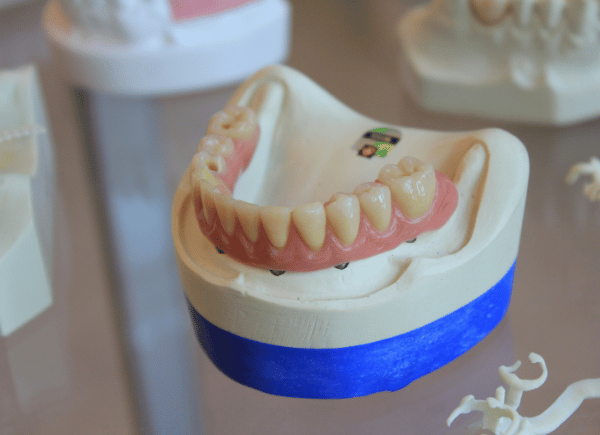
Complete dentures replace an entire arch of teeth, either the upper jaw, the lower jaw, or both. They rest directly on the gum tissue and are custom-fitted to the shape of your mouth for a secure and natural looking result. Complete dentures are recommended when all of the teeth in an arch have been lost or need to be removed, and they are designed to restore full chewing function and facial appearance.
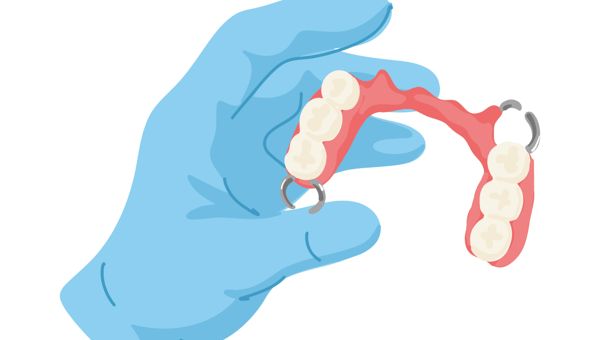
Partial dentures are used when some natural teeth still remain in the arch. They fill the gaps left by missing teeth and are held in place by clasps that attach to the surrounding natural teeth. A partial denture prevents the remaining teeth from shifting out of position while restoring the appearance and function of the areas where teeth are missing.
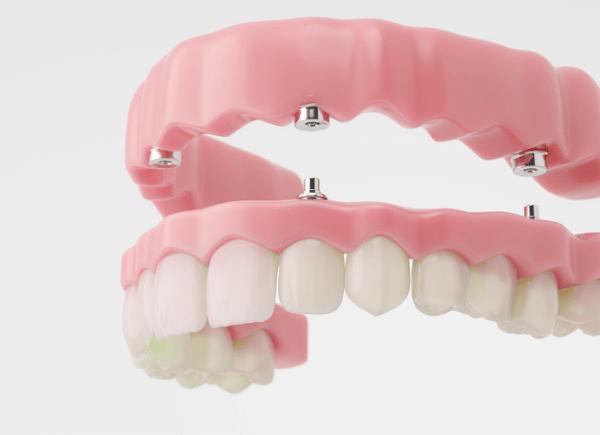
Implant-supported dentures are anchored to a series of dental implants placed in the jawbone, providing a level of stability and security that traditional dentures cannot match. Because they are supported by implants rather than resting on the gum tissue alone, they feel more like natural teeth and eliminate the concern of slipping or shifting during eating or speaking.
Immediate dentures are placed on the same day that the remaining teeth are extracted, so you are never without teeth during the healing process. They serve as a temporary solution while the gums and bone heal and reshape following extraction. Once healing is complete your provider will refit or replace them with a permanent set of dentures for the best long-term fit.
Significant tooth loss
Dentures are a reliable solution for patients who have lost most or all of their teeth in one or both arches and are looking for a way to restore full function and appearance.
Multiple failing or damaged teeth
When several teeth are too damaged or decayed to save, dentures may be recommended as part of a treatment plan that includes extraction and full arch restoration.
Difficulty eating or speaking
Missing teeth can significantly affect your ability to chew food properly and speak clearly. Dentures restore the structure needed to eat a full diet and communicate with confidence.
Bone or gum tissue loss
Patients who have experienced bone or gum tissue loss due to tooth loss or gum disease may benefit from dentures, which are designed to support the surrounding soft tissue.
Consultation and evaluation
Your provider will examine your mouth, assess the condition of your remaining teeth and gum tissue, and discuss which type of denture is the right fit for your situation.
Impressions and fitting
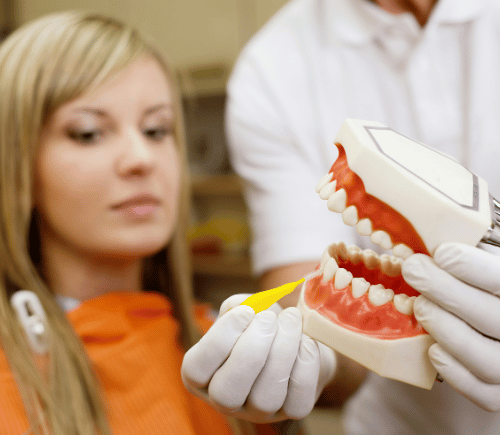
Detailed impressions of your mouth are taken to custom-fit your dentures to the shape of your gums and jaw. Your provider will work with you to select the right tooth shape, size, and shade to achieve a natural looking result.
Placement and adjustment
Once your dentures are ready your provider will place them and check the fit, bite, and comfort. Minor adjustments are common in the first weeks as your mouth adjusts to the new appliance. Your provider will schedule follow-up visits to make sure everything feels right.
Most patients adjust to their new dentures within a few weeks. Here is what to keep in mind during that process.
Immediately after
Initial sensitivity
It is normal to experience some soreness, increased saliva flow, and minor difficulty eating or speaking as your mouth adjusts to the new appliance.
First few days
Adjusting to fit
Your mouth will gradually adapt to the fit and feel of the dentures. Minor irritation or pressure points are common and your provider can make simple adjustments at a follow-up visit to improve comfort. Contact your provider if soreness persists or worsens.
Long-Term
Ongoing care
Remove and clean your dentures daily using a soft brush and denture cleaner. Avoid soaking them in hot water as this can warp the material. Visit your provider regularly so they can check the fit as your gum tissue changes over time.
Crowns
Custom-fitted caps placed over a damaged or weakened tooth to restore its shape, strength, and appearance for long-lasting protection.
Learn more →
Composite Restorations
Tooth-colored fillings that repair cavities and minor damage while blending seamlessly with your natural teeth.
Learn more →
Dental Bridges
A fixed restoration that fills the gap left by one or more missing teeth by anchoring to the surrounding natural teeth on either side.
Learn more →
Implants
A permanent solution for missing teeth that replaces both the root and the visible crown for a result that looks and functions like a natural tooth.
Learn more →©2026 Smart Dental Network, Inc. All rights reserved. Privacy Policy. | Website by Nextiny