
Bone Grafting
Restorative care designed to rebuild bone loss, stabilize your dental foundation, and prepare you for the next step in your treatment plan.
What Is Bone Grafting?
Bone grafting is a surgical procedure that restores bone that has been lost in the jaw due to gum disease, tooth loss, or injury. The procedure works by placing bone material into the affected area, which gradually fuses with your existing bone over time and rebuilds a stable foundation for your teeth or future dental implants.
Bone grafting material does not always come from your own body. Many grafts use processed donor bone or synthetic material that is just as effective and eliminates the need for a second surgical site.
The procedure is performed under local anesthesia and is typically completed in a single appointment. Your Smart Dental Network specialist will walk you through what to expect before, during, and after your graft so you feel fully prepared going in.
Here is what most patients can expect from the process at a glance:
Types of Bone Grafting
Bone Grafting
Bone grafting can take different forms depending on when it's needed. A socket preservation graft is placed immediately after a tooth is extracted, protecting the empty socket before the surrounding bone has a chance to collapse, since jawbone in that area can begin to shrink within just weeks without it, making future implant placement more difficult or impossible. It's one of the most routine grafting procedures and is often done at the same appointment as the extraction. A block bone graft, on the other hand, is used when a tooth has already been missing for a year or more and a larger volume of bone needs to be restored. A small block of bone is harvested from another area of the mouth and secured at the graft site, where it gradually fuses with the surrounding bone over several months, giving patients with more significant bone loss a stronger foundation before implants or other restorative treatment can proceed.
When Is Bone Grafting Recommended?
Tooth loss or recent extraction
When a tooth is removed, the surrounding bone can begin to deteriorate quickly. A graft preserves the site and keeps it viable for future restoration.
Preparing for dental implants
Implants require a stable and sufficient bone foundation to integrate successfully. A bone graft builds that foundation when natural bone is insufficient.
Bone loss from gum disease
Advanced periodontal disease can destroy the bone supporting your teeth. Grafting helps restore what has been lost and stabilizes the remaining teeth.
Sunken facial appearance
Significant jawbone loss can cause the face to appear sunken or aged. A bone graft can restore volume and improve both function and facial structure.
What To Expect
Consultation & imaging
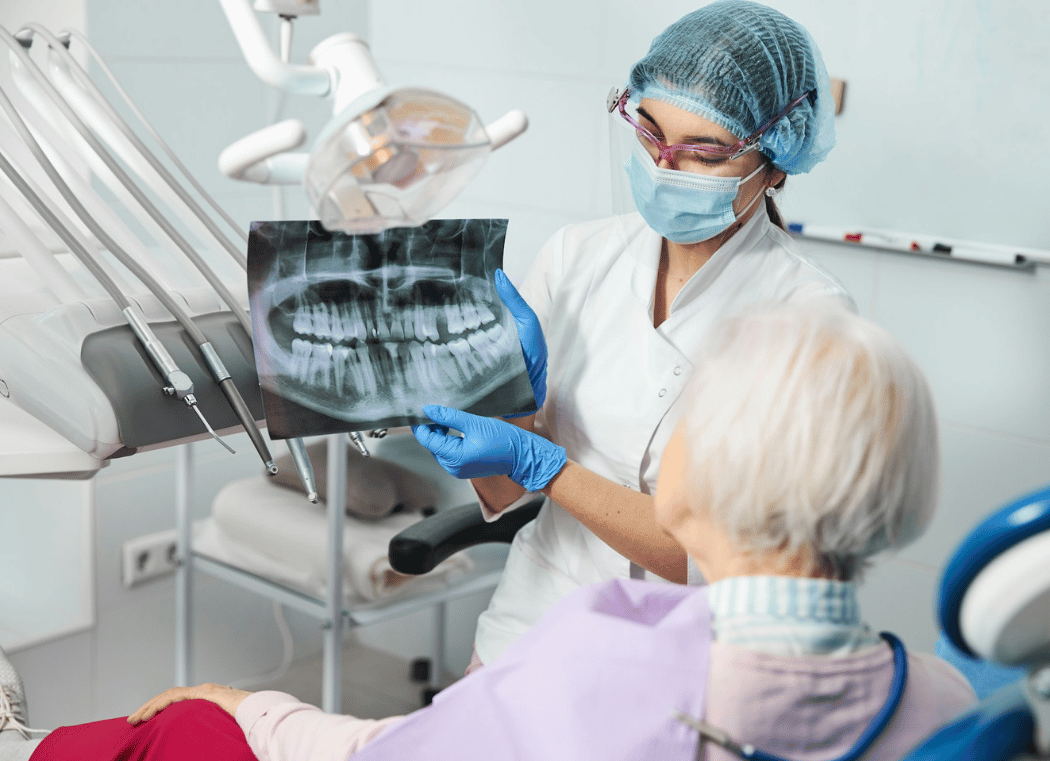
Your provider reviews your dental and medical history, takes X-rays or a cone beam scan to assess your bone levels, and determines which type of graft is right for your specific situation.
Your procedure
The procedure is done using local anesthesia during a single outpatient visit. Your provider will clean the area, place the graft material, and cover the site to protect it while healing begins.
Healing & Integration
Bone grafting requires time to work. Over the following months the graft material gradually fuses with your existing bone, building the stable foundation needed for your next step in treatment.
Recovery & Aftercare
Bone grafting requires time to work. Over the following months the graft material gradually fuses with your existing bone, building the stable foundation needed for your next step in treatment.
First few days
Rest and swelling
Some swelling, discomfort, and minor bleeding in the first 24 to 48 hours is normal. Keep your head elevated, apply ice as directed, and avoid any strenuous activity while the site begins to heal.
As directed
Medications and oral care
Take any prescribed pain relievers or antibiotics as directed and rinse gently with any recommended mouth rinse. Avoid brushing directly over the graft site until your provider confirms it is safe to do so.
Ongoing
Follow-up and monitoring
Your provider will schedule follow-up visits to monitor the healing process and confirm the graft is integrating properly before moving forward with the next phase of your treatment plan.
Other Surgical Perio Procedures
Gingivectomy
Surgical removal of excess or diseased gum tissue to eliminate deep pockets and restore a healthier gum line.
Learn more →
Guided Tissue Regeneration
A procedure using a specialized membrane to encourage the regrowth of bone and gum tissue destroyed by advanced gum disease.
Learn more →
Gum Grafting
Restores receded gum tissue by covering exposed root surfaces to reduce sensitivity and prevent further recession.
Learn more →
Periodontal Plastic Surgery
Reshapes the gum line to improve appearance and correct issues such as a gummy smile or uneven gum levels.
Learn more →
Ridge Augmentation
Rebuilds the natural contour of the jaw ridge after tooth loss to create a proper foundation for implants or restorations.
Learn more →
Ridge Preservation
Performed after extraction to prevent bone loss in the socket and preserve the jaw ridge for future treatment.
Learn more →
Sinus Lift
Adds bone to the upper jaw near the molars to create sufficient bone height for safe implant placement.
Learn more →Related Resources
Have a Concern You'd Like Evaluated?

©2026 Smart Dental Network, Inc. All rights reserved. Privacy Policy. | Website by Nextiny