
Guided Tissue Regeneration
Advanced periodontal treatment designed to encourage the natural regrowth of bone and gum tissue lost to advanced gum disease.
What Is Guided Tissue Regeneration?
Guided tissue regeneration is a surgical procedure that encourages the body to regrow bone and gum tissue that has been destroyed by advanced periodontal disease. During the procedure a small biocompatible membrane is placed between the gum tissue and the bone, acting as a barrier that prevents fast-growing soft tissue from filling the space before the slower-growing bone has a chance to
regenerate naturally.
The membrane used in guided tissue regeneration is designed to work with your body, not against it. In many cases it dissolves on its own over time, meaning no second procedure is needed to remove it.
The procedure is performed under local anesthesia and is typically completed in a single appointment. Your Smart Dental Network specialist will walk you through every detail of the process and what to expect during your recovery before treatment begins.
Here is what most patients can expect from the process at a glance:
When Is Guided Tissue Regeneration Recommended?
Significant bone loss from gum disease
Advanced periodontal disease that has caused measurable bone loss around the teeth, leaving them without adequate support and at risk of further deterioration.
Deep periodontal pockets
Pockets between the teeth and gums that have become too deep to be treated through cleaning alone and require surgical intervention to restore the surrounding structures.
Loose or shifting teeth
Teeth that have begun to shift or feel unstable due to the loss of supporting bone, indicating that regeneration of the bone structure is needed to stabilize them.
Preparing for dental implants
Patients who need bone volume restored in a specific area before or during the implant process to ensure the implant has a stable and sufficient foundation to integrate into.
What To Expect
Consultation & evaluation
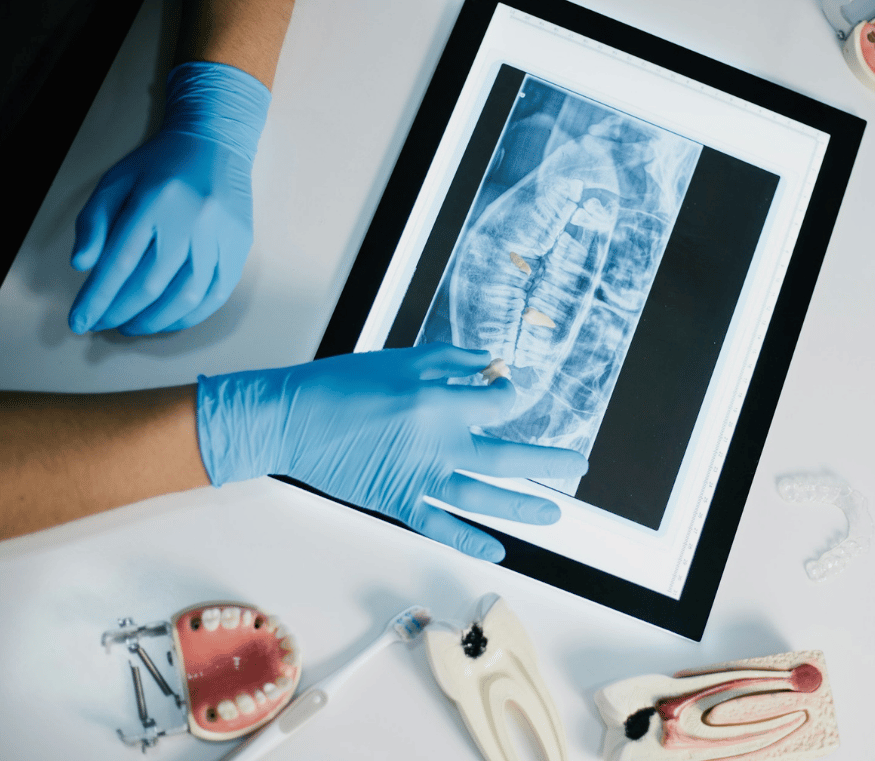
Your provider reviews your periodontal history, examines the affected area, and takes imaging to assess the extent of bone and tissue loss before confirming guided tissue regeneration is the right course of treatment.
Your procedure
The procedure is performed under local anesthesia in a single outpatient appointment. Your provider carefully cleans the affected area, places the membrane over the bone defect, and closes the site to allow regeneration to begin undisturbed.
Healing & regeneration
New bone and tissue growth takes time. Your provider will monitor your progress at follow-up visits over the coming months to confirm the regeneration is progressing as expected before moving forward with any next steps.
Recovery & Aftercare
Here is what to keep in mind in the days and weeks following your guided tissue regeneration procedure.
First few days
Rest and swelling
Some swelling, tenderness, and minor bleeding in the first 24 to 48 hours is normal. Avoid disturbing the surgical site, stick to soft foods, and keep your head elevated to minimize swelling during initial healing.
As directed
Medications and oral care
Take any prescribed pain relievers or antibiotics as directed and use any recommended mouth rinse to keep the area clean. Avoid brushing directly over the surgical site until your provider confirms it is safe to do so.
Ongoing
Follow-up and monitoring
Guided tissue regeneration requires several months to show full results. Your provider will schedule regular follow-up visits to monitor bone and tissue regrowth and confirm the procedure is progressing as planned.
Other Surgical Perio Procedures
Bone Grafting
A procedure that restores bone that has been lost due to gum disease, creating a stable foundation for the teeth and supporting long-term oral health.
Learn more →
Gingivectomy
Surgical removal of excess or diseased gum tissue to eliminate deep pockets and restore a healthier gum line.
Learn more →
Gum Grafting
Restores receded gum tissue by covering exposed root surfaces to reduce sensitivity and prevent further recession.
Learn more →
Periodontal Plastic Surgery
Reshapes the gum line to improve appearance and correct issues such as a gummy smile or uneven gum levels.
Learn more →
Ridge Augmentation
Rebuilds the natural contour of the jaw ridge after tooth loss to create a proper foundation for implants or restorations.
Learn more →
Ridge Preservation
Performed after extraction to prevent bone loss in the socket and preserve the jaw ridge for future treatment.
Learn more →
Sinus Lift
Adds bone to the upper jaw near the molars to create sufficient bone height for safe implant placement.
Learn more →Related Resources
Have a Concern You'd Like Evaluated?

©2026 Smart Dental Network, Inc. All rights reserved. Privacy Policy. | Website by Nextiny