Safe, experienced wisdom tooth extraction designed to relieve discomfort, protect your surrounding teeth, and support your long-term oral health.
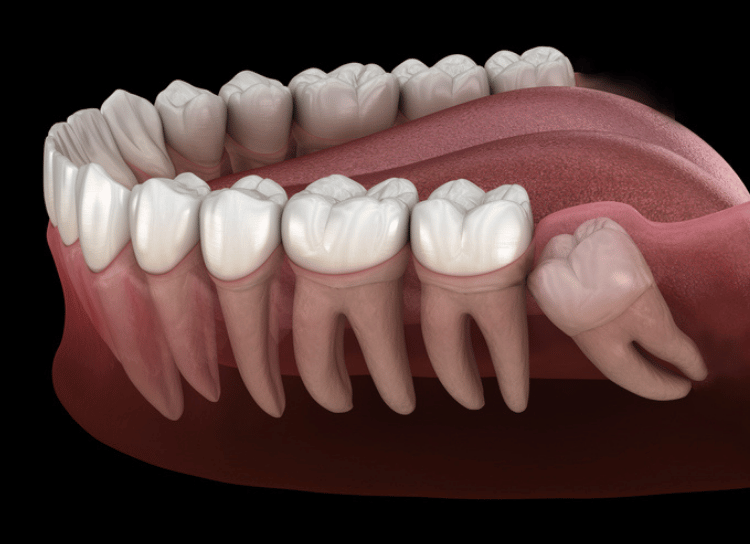
Wisdom teeth removal is the surgical extraction of the third molars, the last teeth to develop in the back of the mouth. When these teeth do not have enough room to grow in properly, they can become impacted, cause pain, or create problems for surrounding teeth and gums.
Wisdom teeth removal is more routine than most patients expect. With the right preparation and a skilled provider, most people are back to their normal routine within just a few days.
Wisdom teeth removal is handled with care and precision at every step. Your provider will evaluate your teeth and imaging beforehand to fully understand your situation and make sure you feel informed, comfortable, and confident before your
procedure begins.
Impacted wisdom teeth
Teeth that are trapped beneath the gum line and unable to fully erupt, causing pressure, pain, or damage to surrounding teeth.
Crowding or shifting
Wisdom teeth pushing against existing teeth as they grow in, causing misalignment or undoing previous orthodontic treatment.
Recurring infection or swelling
Persistent gum pain, swelling, or infection around the back of the mouth that keeps returning and does not resolve on its own.
Cysts or abnormal growth
Fluid-filled sacs or unusual tissue forming around an unerupted wisdom tooth that can damage surrounding bone if left untreated.
A soft tissue impaction occurs when a wisdom tooth has partially erupted through the gums but has not fully emerged into the mouth. This can create an area where bacteria and debris become trapped, leading to inflammation, discomfort, swelling, or infection of the surrounding gum tissue. Using advanced diagnostic imaging, your surgeon can evaluate the position of the tooth and determine the most appropriate treatment approach. Removal of a soft tissue impacted wisdom tooth is typically less complex than deeper impactions and can help prevent recurring infections and other complications while supporting long-term oral health.
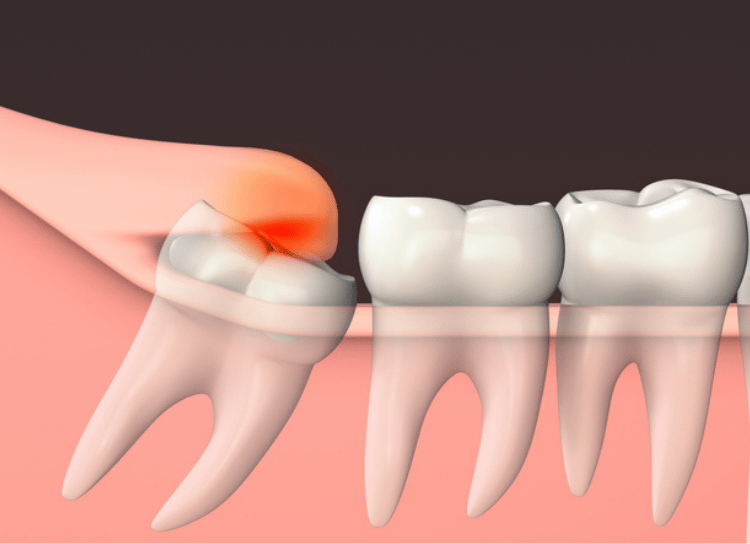
A partial bony impaction occurs when a wisdom tooth remains partially embedded within the jawbone and is unable to fully erupt into its proper position. These teeth can contribute to pain, infection, damage to adjacent teeth, and other oral health complications if left untreated. Using advanced diagnostic imaging and surgical planning, your oral surgeon will evaluate the position of the tooth and surrounding structures to develop the most appropriate treatment approach. Removal of a partially impacted wisdom tooth requires careful access through the surrounding bone and is a commonly performed procedure designed to prevent future complications and support long-term oral health.
A full bony impaction occurs when a wisdom tooth remains completely embedded within the jawbone and is unable to erupt through the gums. These teeth may contribute to pain, infection, cyst formation, damage to adjacent teeth, or other complications if left untreated. Using advanced 3D imaging and surgical planning, your oral surgeon will carefully evaluate the position of the tooth and surrounding anatomical structures to determine the safest and most effective treatment approach. Removal of a fully impacted wisdom tooth is a commonly performed oral surgery procedure that can help prevent future complications and protect your long-term oral health.
Consultation and imaging
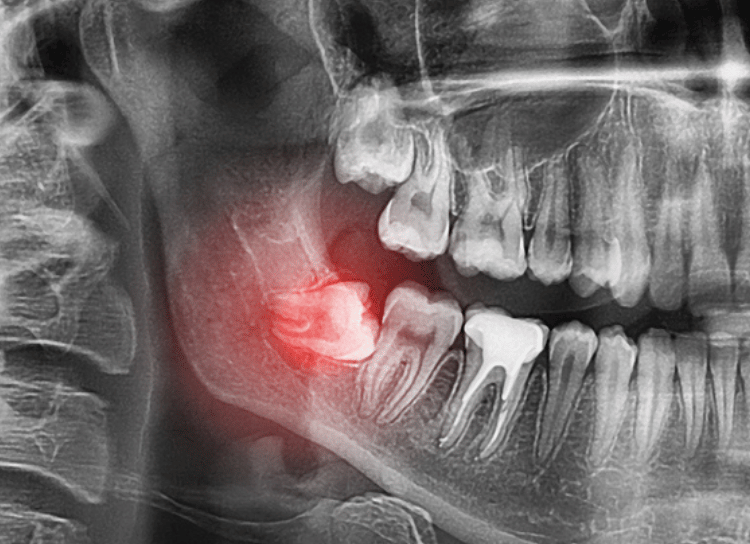
Your provider reviews X-rays or a scan to assess the position of your wisdom teeth, discuss your options, and confirm the best approach for your specific situation.
The procedure
The area is numbed with local anesthesia or sedation so you remain comfortable throughout. Most extractions are completed in under an hour and you go home the same day.
Recovery and follow-up
Your care team will send you home with clear aftercare instructions. Most patients feel back to normal within three to five days, and your provider will check in to confirm healing is on track.
Wisdom teeth recovery is manageable and typically quick. Here is what most patients experience.
Day 1-2
Immediately After
Some swelling, soreness, and light bleeding is normal. Stick to soft foods, avoid rinsing vigorously, and follow your provider's aftercare instructions closely.
Days 3–4
Improving
Swelling and discomfort reduce significantly for most patients. Over-the-counter pain relief is usually sufficient and most people begin returning to normal activity.
Days 5-7
Follow-up
Most patients are feeling close to normal by this point. Your provider will confirm healing is progressing well and address any questions before clearing you fully.
Full Mouth Reconstruction
Comprehensive restoration combining multiple procedures to rebuild the function, appearance, and long-term health of your smile.
Learn more →
Biopsies
Oral tissue sampling to evaluate unusual sores, lesions, or growths for diagnostic purposes.
Learn more →
Orthognathic Procedures
Corrective jaw surgery to address misalignment, improving function and long-term oral health.
Learn more →
Frectenomies
Surgical release of restrictive oral tissue to restore proper function and support long-term oral health.
Learn more →
Full-Arch Implant Solutions
Full-arch implant-supported teeth placed in a single appointment, a permanent alternative to dentures.
Learn more →©2026 Smart Dental Network, Inc. All rights reserved. Privacy Policy. | Website by Nextiny